




Help Bats!
Learn how you can help save bats and their habitats
Help Save bats!
White-nose syndrome is devastating the cave-dependent bats of North America. A fungal disease, WNS, was first reported in a single cave in the winter of 2006. Since then, WNS has spread to 23 states and five Canadian provinces. Seven species are affected, two of which are already endangered. Over six million bats are dead. Please help find a way to slow or stop this terrible wildlife disease.
Find ways to help below:
- Speak up for bats
- Keep your local habitat healthy and clean
- Take steps to reduce light pollution
- Support bat conservation efforts
- Tolerate bat colonies in buildings when young are present
- Consult bat conservation organizations or wildlife agencies before excluding bat colonies from buildings
- Contact your state and federal representatives and ask them to support bat conservation
- Respect cave closures
- Decontaminate gear after visiting caves
Be Bat Friendly
Once, ancient forests covered most of eastern North America and provided plenty of habitat for bats. With the arrival of Europeans, those forests rapidly fell to large-scale logging and agriculture. Some colonial bat species adapted to the new shapes on the landscape and made use of barns and outbuildings, which were warm, dry, and fairly safe from predators. As agriculture has given way to residential development, bats are making use of the only habitat left - our houses and the infrastructure of suburban life, like storefronts, culverts and bridges. Bats share our habitat and are a natural part of our world, and now they need our help more than ever. Use this section to become bat friendly or to help others learn to share the world with bats.
Learn about bats!
Use this section to learn about Virginia's bats!
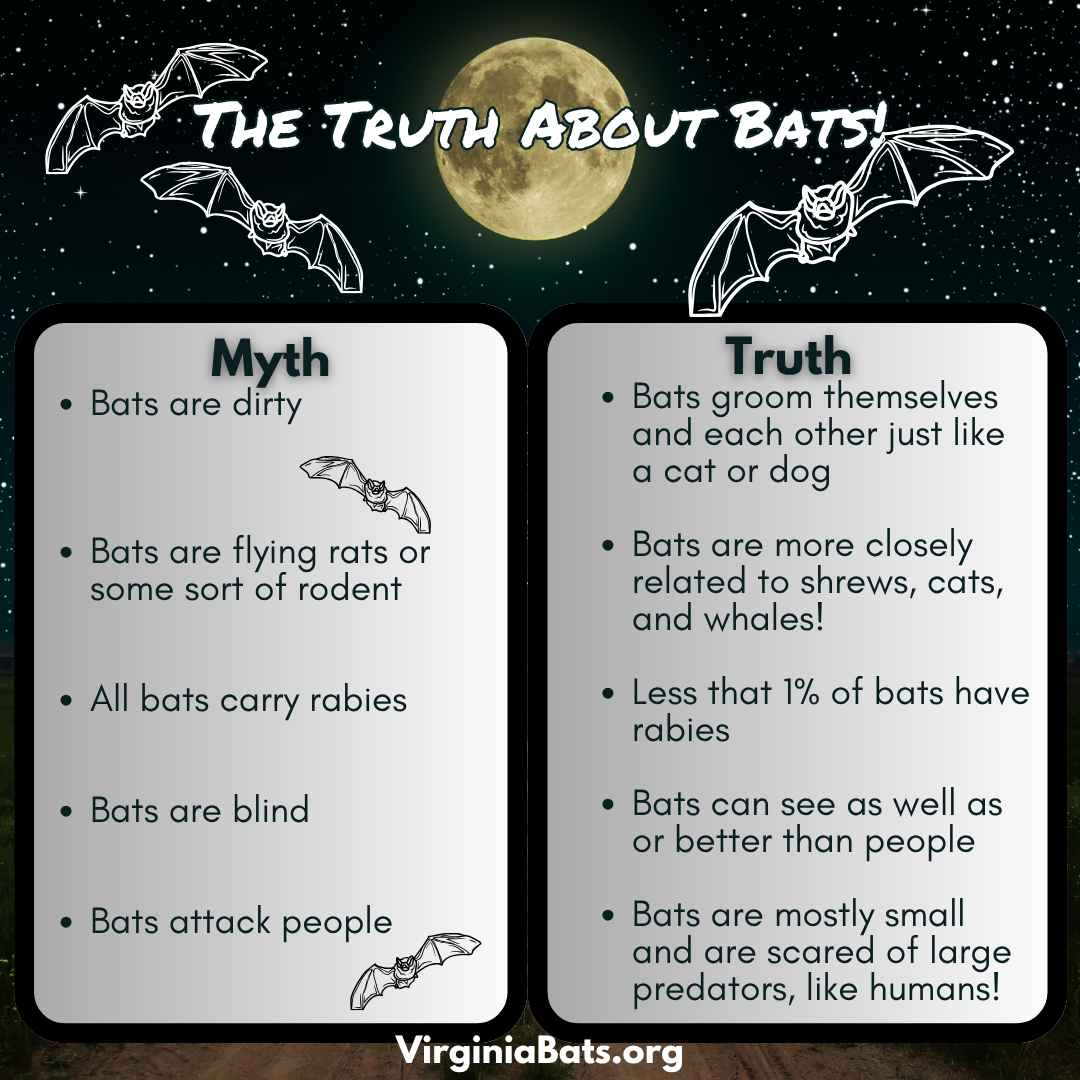
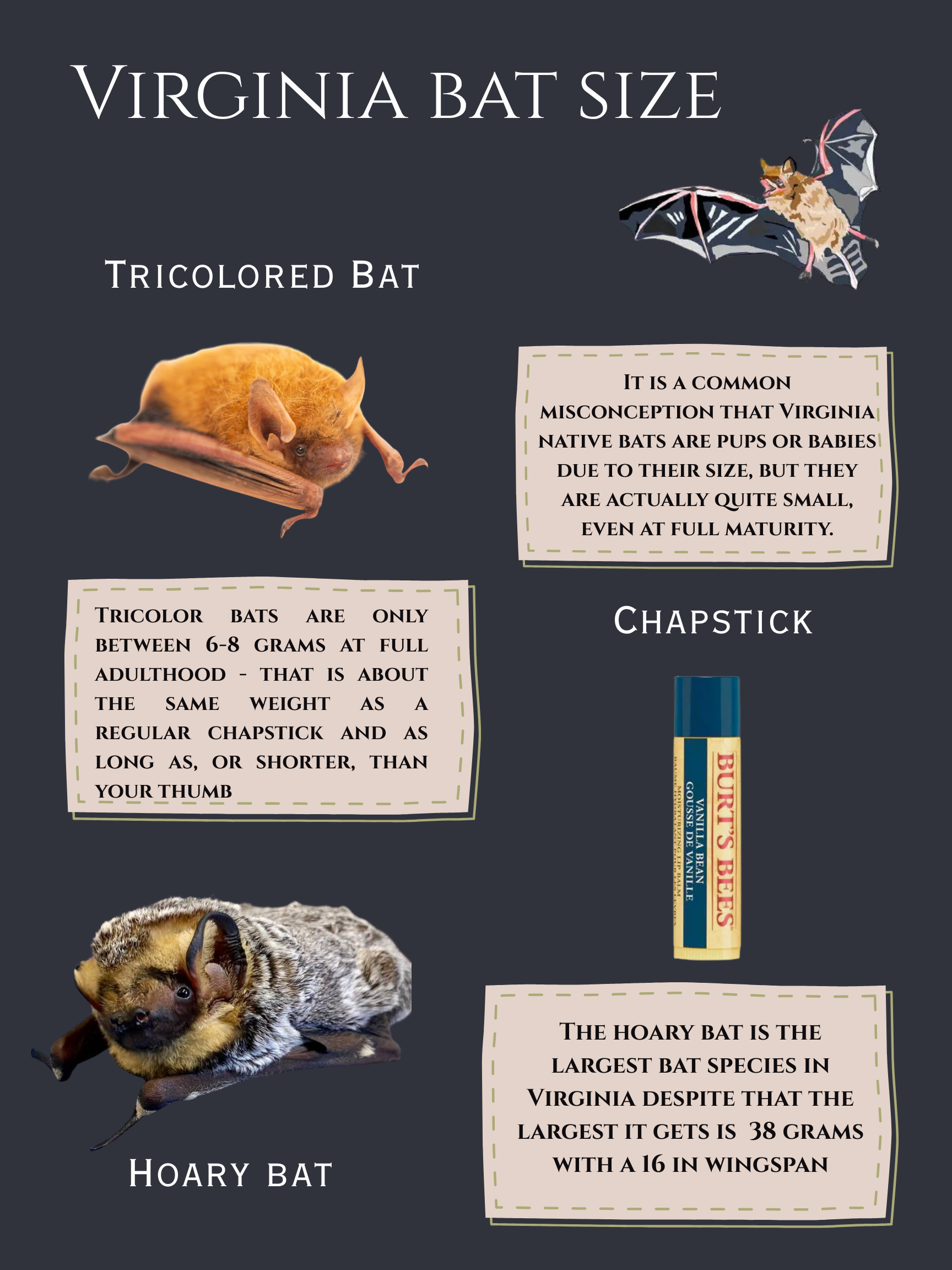
View here to learn more about Virginia bat species!
Bat Habitat
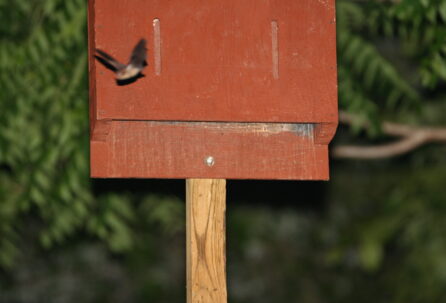
Even if you never need to exclude a building colony or find a bat in need of rescue, you can still help bats by providing and supporting good habitat. Consider building and installing bat boxes. But do your homework first. Many commercially available bat boxes are completely unsuitable for bats! Also consider what will happen to the colony if you move or after your project is installed. Bat boxes need maintenance and monitoring, so please make arrangements to ensure the habitat remains after you move on.
Bat Conservation & Management and Bat Conservation International have excellent information on selecting and installing bat boxes.
Bats & Agriculture:
Partners in Growth
Contact us to learn more about becoming a certified Bat Friendly Grower.
Why bats?
Bats save US agriculture at least $3.7 billion per year by reducing the need for chemical pest control. That means bats save farmers, on average, $74 per acre.
A mother bat eats her own body weight in insects every night. Male and juvenile bats eat about 1/2 their body weight every night.
Many of the insects bats eat are forest pests, including stink bugs, leaf miners, cucumber beetles, bean weevils, corn cutworms, and thousands more.
In a single summer, 150 bats can eat 38,000 cucumber beetles, 16,000 June bugs, 19,000 stink bugs, and 50,000 leafhoppers.
White-nose syndrome, a fungal disease, is killing our bats by the millions. Bat-friendly growers help by maintaining a safe habitat for surviving bats.
This grower promotes bat conservation by:
- maintaining natural areas
- minimizing water use
- utilizing integrated pest management practices
Pro-Bat Lifestyle
Help for Specific Bat Situation
Copyright © 2021 Bat Conservation & Rescue of Virginia. All rights reserved.