Leslie Sturges

Leslie Sturges

A delightful sac of smell!
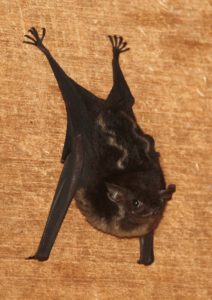
Hi everyone! I hope you all had a good week! Yesterday, a dam at an iron-ore mine in Brazil collapsed. Because of this disaster, I thought I would research a bat from Brazil. I found a very cute bat! It looks like a shrew that knows something you don’t. It’s called the Greater sac-winged bat. In addition to Brazil, these bats live in several other Central and South American countries. Their range is from central Mexico, through Central America, into South America. They live in the South American countries of Brazil, Bolivia, Guyana, Suriname, Guyane, and the Antillean islands. The Greater sac-winged bat has dark brown fur, and some have zig-zag stripes on their back. They have long noses and upper lips that are very mobile. They get their name from the small sacs or pouches on their wings. While grooming themselves, the males fill their sacs with drops of urine and glandular secretions. When they are trying to attract a female, the male will hover over her and flap the scent in their sacs toward her. They will also use this technique to ward off other bats from outside their territory. Another interesting fact about these bats is that their pups babble. They will vocalize calls and other sounds, but jumbled up just like a human baby’s babbles. This is the first mammal that is not a primate to be seen babbling. If you’d like to read more about the Greater sac-winged bat, you can find information here.
What’s a wattle??

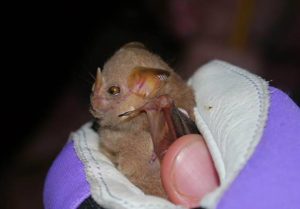
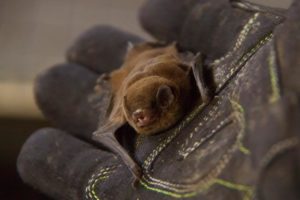
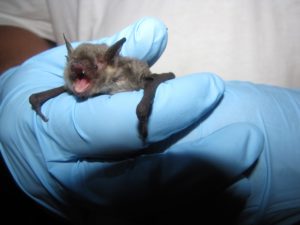
Hello everyone! I hope you all had a good week. I had a pretty good one because it started with a snow day. That’s right, it finally snowed! While it has been cold and wintery here in the US, people in Australia are in the middle of summer. And with Australian summers, come fires. Because there are so many fires burning in Australia right now, I decided to research an Australian bat. There is a cute little bat called the Chocolate Wattled Bat. Unlike most bats living in Australia, these bats are micro-bats! They have milk-chocolate brown fur, which is where they get their name. They also have a pink nose and a cute, squishy face. They like to roost under bark and in tree hollows in south-western Australia. Their diet consists of moths and beetles. And the Chocolate Wattled Bat will hibernate in the winter when the insects aren’t always around. Although south-western Australia isn’t known for being cold, it does get chilly. And with food scarce, they can’t eat enough to keep them warm. These bats do have a few predators including hawks, owls, cats, wildfires, and humans. If you would like to read more about the Chocolate Wattled Bat, you can find information here and here.

Shut down the Shutdown!! Save our parks! Save our bats!

Hi everyone! I hope you all had a good week. It hasn’t been a very good week for National Parks and the plants and animals that live in them. That’s because the government shutdown continues. Many parks around the country are closed, but some remain open. Many of the parks that are open are suffering because of the lack of employees working at the park. Parks are being vandalized and trash is piling up. Sadly, vandals have even killed trees at Joshua Tree National Park. There are other effects of the shutdown too. Because government employees are not allowed to report to work, wildlife conservation and research has been put on hold. That means that government research on White-Nose Syndrome in bats has been halted. Luckily, not all government work has stopped. The US Fish and Wildlife Service has halted construction on 16 miles of Oklahoma Highway 16 between the town of Okay and the city of Wagoner. The work has been stopped to give investigators time to determine whether the construction will affect endangered Gray Bats in the area. Research is needed to determine whether or not sediment from the road construction has been affecting the quality of the water in the area. This could reduce the number of insects in the area, which would affect the bat’s ability to find food. If you would like to read more about this, you can find information here. I hope everyone has a good week. And, please, if you are fortunate enough to be allowed onto National Park land during this shutdown, take care of our parks. Please pick up your trash, stay on trails, and respect the plants and animals who live there.
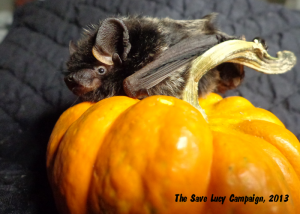
Flying into the new year! (OK, maybe sitting around eating mealworms, but a new year anyway)

Hi everyone! I hope you all had a good week and a happy New Year! To kick off the new year, I thought I would make this a happy blog post. I found a lovely article about a recently recovered bat in the Salthaven West Wildlife and Education Center in Saskatchewan, Canada. He is an adorable Big Brown bat that will be released this May. He had very severe injuries when he came in, including a facial injury that rehabbers think came from a fight with another male bat. The injury had healed, but it left a bad scar. Because of this scar, his rehabbers named him Scarface. Despite his scary name, Scarface is very calm and happy for all the help he is receiving. He is staying in an enclosure much like the ones we have here at Save Lucy. The enclosure has a few other male bats, and some places for them to hang, hide and climb. The bats at the Center are kept awake all winter, even though they would be hibernating out in the wild. They get fed lots of mealworms to keep them happy and well fed. The bats at the Center are usually released back into the wild sometime in May, as long as they don’t still need help recovering from whatever brought them there in the first place. This year, Scarface will join the pack and fly back to his family. If you would like to read more about little Scarface, you can find the article here. I hope you all have a fantastic week! Happy New Year!

You’re curvy where again??

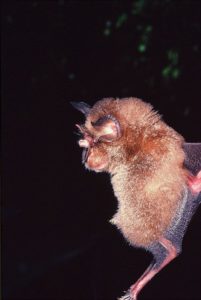
We want to thank Blogger Rachael on her 51st blog post this year! She’s featured almost 30 species. Thank you Rachael. We’re looking forward to what you discover in 2019! Hi everyone! I hope you all had a very Merry Christmas and are enjoying your winter holidays. I am enjoying my school vacation very much. Since this is my last blog post of the year, I thought it would be nice to look back at all that happened this year. It’s been a rather long year that began with the Winter Olympics in Pyeong Chang, South Korea and is ending with a tsunami and volcanic eruptions in Indonesia. In between, there were hurricanes, wild fires, earthquakes, and more volcanic eruptions. It sounds like a bad year, but there were also some good things that happened. Over the summer, 12 members of a youth soccer team and their coach were rescued from an underground cave in Thailand. Not only did we have the Winter Olympics this year, but we also came together for the World Cup in July. And, in what is possibly the cutest news story of the year, an adult male koala needed to be rescued for the third time in his life when he got his head stuck in a fence in South Australia. And now, since the people of Indonesia are having such a difficult time, I thought I’d research another Indonesian bat. I found an adorable leaf nosed bat called the Arcuate horseshoe bat. They were discovered by Wilhelm Peters in 1871. He gave them the name “arcuatus” which is Latin for “curved”. Peters never said why he decided to name these bats curved, but some scientists believe that it is due to the curve of their nose. These adorable furry critters live in Southeast Asia, […]

My what Grinchy eyes you have!!

Hi everyone! I hope you all had a good week! I had a fantastic week because it was the last week of school before winter break! I am going to enjoy the next two weeks by sleeping late and celebrating the holidays with my family. Since it is the Christmas season, I decided to write this week’s blog on a bat that, in my opinion, looks very similar to the Grinch. It took some looking but I found an adorable critter called the Little White-shouldered bat. These bats have leaf shaped noses that resemble the Grinch’s famous smirk. They have brownish-gray fur with striking white shoulders that give them their name. They also have yellow eyes that look so cool! Little White-shouldered bats have big, almost see-through, ears that look adorable atop their small heads! Not a lot of information has been collected on what these bats eat, but scientists have looked at the teeth of Little White-shouldered bats and concluded that they probably eat insects like most bats in America. They live in Central America into Brazil, Guyana, Venezuela, Trinidad, and Bonaire Island. These bats like to roost in tropical forests near streams. They are typically found in evergreen forests. If you want read more about Little White-shoulder bats you can do so here. I also found a very cute story about how bats saved Christmas. If you would like to read it, you can find it here: I hope everyone has a very Merry Christmas!

Do you hear what I hear?

Hi everyone! I hope you all had a good week! I am excited that Winter Break is coming soon. Sadly, I have to wait another week to get my vacation. I found a very interesting article on bats regarding their hunting strategies and how they vary from species to species. An international group of biologists set out to compare five different bat species. They studied a total of 94 bats. The scientists fixed each bat with a tiny recording device to look at their flight path and listen to what noises they made. The researchers used this information to discover where the bats found food and whether or not other bats were nearby. They looked at 2 species of bats that hunted socially for prey, such as swarms of insects or fish, who are found in unpredictable locations. Then they looked at three species that foraged for food alone and whose prey was always at the same location and could be found easily. The bats that foraged alone ate things like fruit and tried to separate themselves from others. If other bats were around it could create a competition for food. The bats that foraged together were much more social. The researchers found that these bats tended to eavesdrop on the other bats feeding calls and were constantly communicating with others of their own species to see if they had found food. When one bat found food to eat, others followed close behind and hunted behind them. In order to test if the bats were truly hunting together for the food, the scientists placed three recording devices around where the bats hunted. One recording device played white noise, one played a normal bat call, and one played a bat’s feeding call. When the bats heard the white noise, they mainly ignored the recording. When they heard the normal call they began to investigate, […]

The lovely language of algorithms

Hi everyone! I hope you all had a good week! I’m excited because it’s almost Christmas! I found a very interesting article about a group of scientists in Uruguay who are creating a special AI algorithm that will help in identifying bats flying around! This is important because bats in South America speak different dialects than the same species in North America. So, the databases in use in North America don’t work in Uruguay or the rest of South America. This new algorithm will be able to pick up a bat’s call through a microphone and determine which species it is. This algorithm was first created to help scientists learn which bats were flying into windmills. This information could then be used to work with wind farm operators to help protect bats. Studies have shown that more than 40 bat species are affected by windmills and almost 300 mass bat death events have occurred due to wind turbine blades. Until now, scientists needed to catch bats flying in an area in order to identify them. With this algorithm, the very difficult and time-consuming task of catching a bat is no longer necessary. In addition to being used to help scientists protect bats from wind turbines, this algorithm could be used to identify unknown bat species. Hopefully the use of this algorithm will help scientists locate a bat that has been believed extinct in Uruguay for 50 years. If you would like to read more about this study, you can find information here. .
Bats of the frozen north

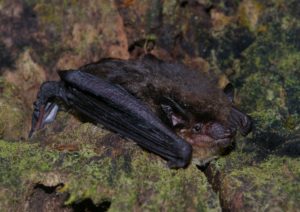
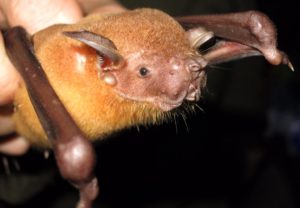
Hi everyone! I hope you all had a good week. My week started with my dog’s birthday. We’ve been celebrating and spoiling her all week. Yesterday, there was an earthquake in Alaska. I decided to research an Alaskan bat. I found an adorable bat called the Silver-haired bat. The Silver-haired bat lives in the temperate rain forests of Southeast Alaska. Actually, these bats live throughout the United States, including Save Lucy’s state of Virginia, and southern Canada. The Silver-haired bat has black fur all over its body except for their ears. The black fur on their back has silver tips which makes the bat look like it has a back full of silver fur. These bats also have short round and hairless ears that lay close to their head. Like all bats in North America, these bats are insectivores. They love to munch on an assortment of meals such as flies, moths, mosquitoes, beetles, ants, and crickets. Silver-haired bats like to roost near water in areas near lakes, ponds, and streams. They roost here because they hunt close to the water where there is an abundance of tasty bugs for them to crunch on. They roost in tree foliage, under loose bark, and sometimes buildings. They like to hibernate under loose bark and in tree hollows. If you would like to learn more about the Silver-haired bat, you can read about them here and here.

Lips of bulldog, cheek of chipmunk, toe of ??

Hi everyone! I hope you all had a good week! I did because we got a snow day on Wednesday. We got about an inch of snow before it started sleeting. The wonderful people in charge decided that it wasn’t safe for us to go to school. It was wonderful! It was glorious! And then to add to the gloriousness, we got a 2 hour delay the next day! It was great! I hope everyone else enjoyed their snow days as much as I did. I was looking up interesting bat species and I found one called the Bulldog Bat. I think this bat is really cute. Of course, all bats are cute, but I might be a little biased toward this one because it looks a little bit like my pug. The name Bulldog Bat actually is used to describe two different species of bats that live in Central and South America. These bats hunt over water. As their name suggests, these bats have big lips and a flat squarish muzzle that makes them look like a bulldog. They also have cheek pouches that they use to store food in. These bats have very large hind feet with hooked claws. They use their claws to catch prey from the surface of the water. The Lesser Bulldog Bat eats mostly insects. The Greater Bulldog Bat eats fish. Once they catch their prey, they chew their food and store it in their cheek pouches to finish later. The Lesser Bulldog Bat uses echolocation to find its prey. The Greater Bulldog Bat skims the top of the water echolocating on ripples made by the fish. One problem the Bulldog Bat has with hunting over water is that they get wet wings, however these bats actually have an oily substance coating their wings […]